Before we talk about fruit, at SiCar Farms we talk about soil. Everything we grow depends on it, so we give it the same attention as every other stage of production.
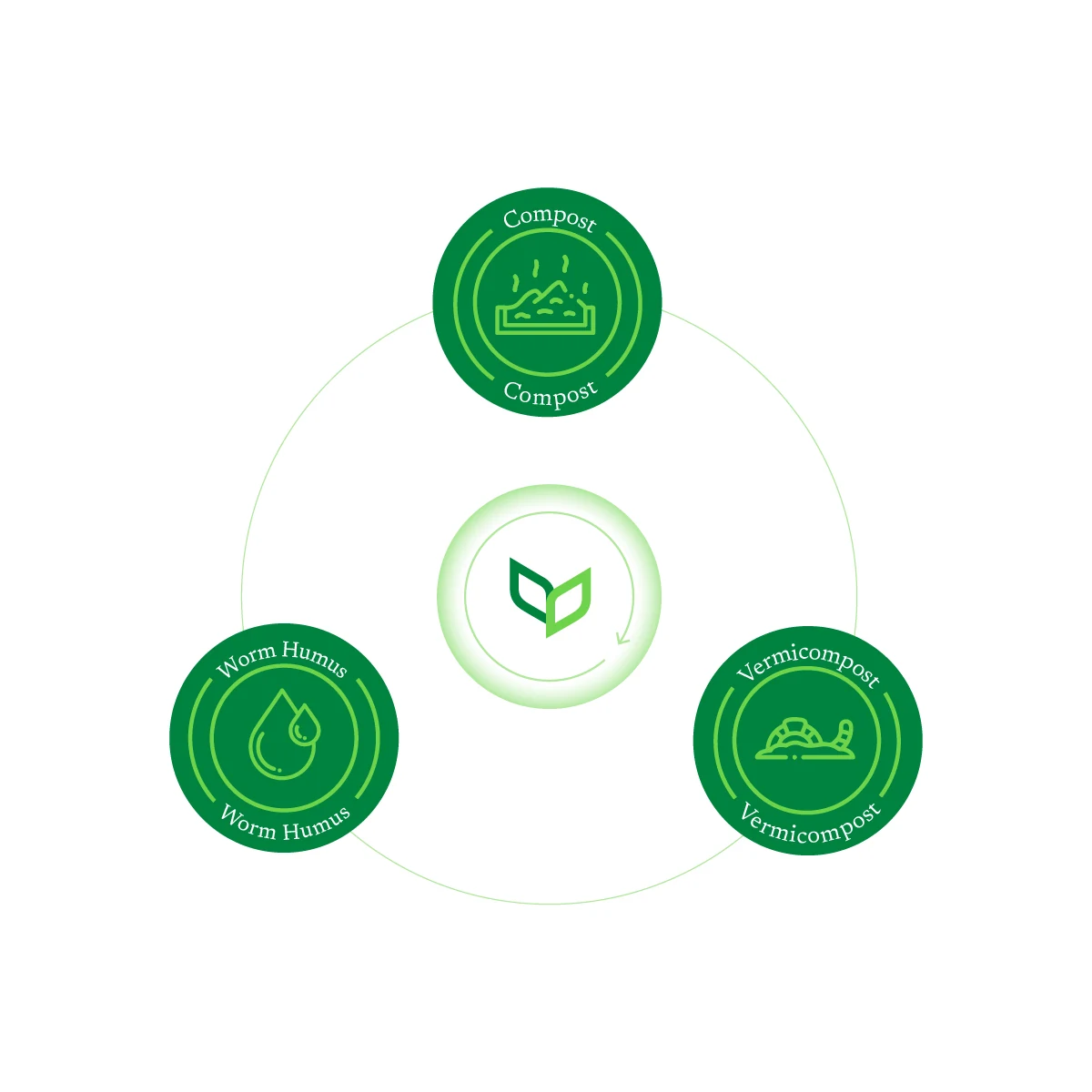
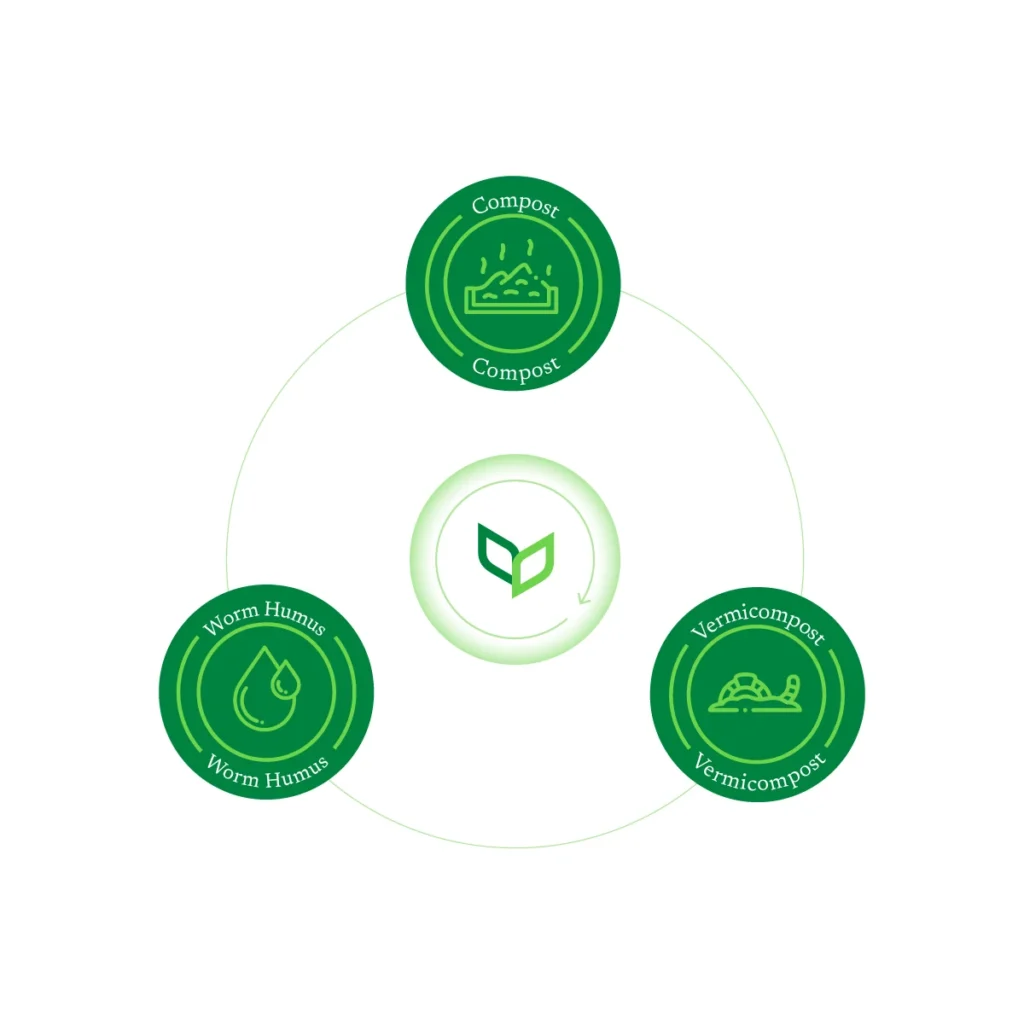
Part of that care is producing our own biofertilizers: compost, vermicompost, and worm humus. All three are made within our own operation, as part of a cycle designed to make full use of what we grow.
A Cycle That Starts on Our Ranches
On our Ranches, we also make use of the fruit remains from our crops. These residues are part of the controlled diet of our cattle, which in turn provide the manure we use in our composting area. What leaves the field returns to it.
Compost
We make compost from our cattle’s manure and decomposing fruit that we receive as waste from the state’s food banks. Fruit that can no longer be eaten gets a second purpose: nourishing the soil where new harvests will grow. The process reduces waste, improves soil health, and makes our production cycle more efficient.
Vermicompost: The Work of the Red Wiggler
The quality of our vermicompost depends on careful attention to each stage:
- The bed. It is prepared with manure pre-composted for 30 to 45 days.
- Moisture. It is kept between 70% and 80%, which helps the red wiggler worm break down its food faster.
- Control. Temperature stays between 20 and 25 °C (68–77 °F), with a pH of 6.5 to 8.5.
- Timing. The full process takes around two and a half months.
Vermicompost works as an organic amendment: it regenerates the soil, improves its ability to retain water, and adds beneficial microbial life.
Worm Humus: The Liquid Side of the Process
Worm humus is the liquid obtained during vermicomposting. As water moves through the worm bed, it carries the nutrients, humic substances, and microorganisms the worms produce as they break down their food. What we collect is a liquid concentrate of the biological richness of vermicompost.
It takes about a month and a half to produce. The result is a uniform, dark liquid, rich in microorganisms and nutrients.
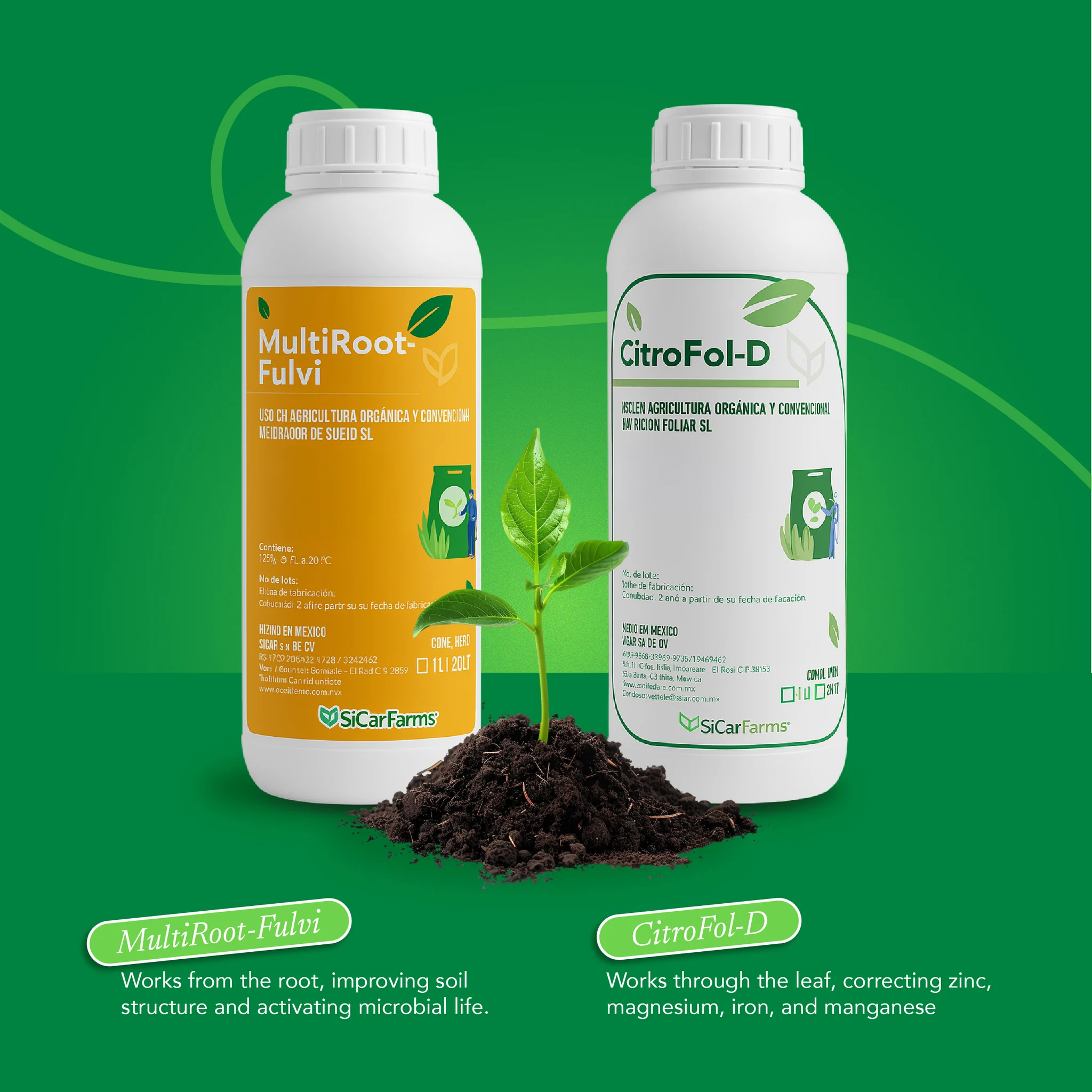
Because it is liquid, it fits easily into our plants’ nutritional applications. It improves soil health, stimulates crop growth, and helps us reduce the need for chemical products.
From the Plant’s Earliest Stages
We use biofertilizers in nutritional applications throughout plant development, starting before the plants go to the field. This lets us care for their nutrition from the start with inputs we produce ourselves and reduce reliance on synthetic products. It is a way of caring for both the soil and the people who eat our fruit.
Soil as the Starting Point
Producing our own biofertilizers means we know every input that reaches our plantations, and it closes a cycle that begins on our Ranches. For us, a good harvest starts with well-cared-for soil.